The Branol Hotel / Brand in Use
Building a contemporary hospitality brand from the ground up: identity, digital experience, guest acquisition and operational systems for a newly opened hotel in Mwingi, Kenya.
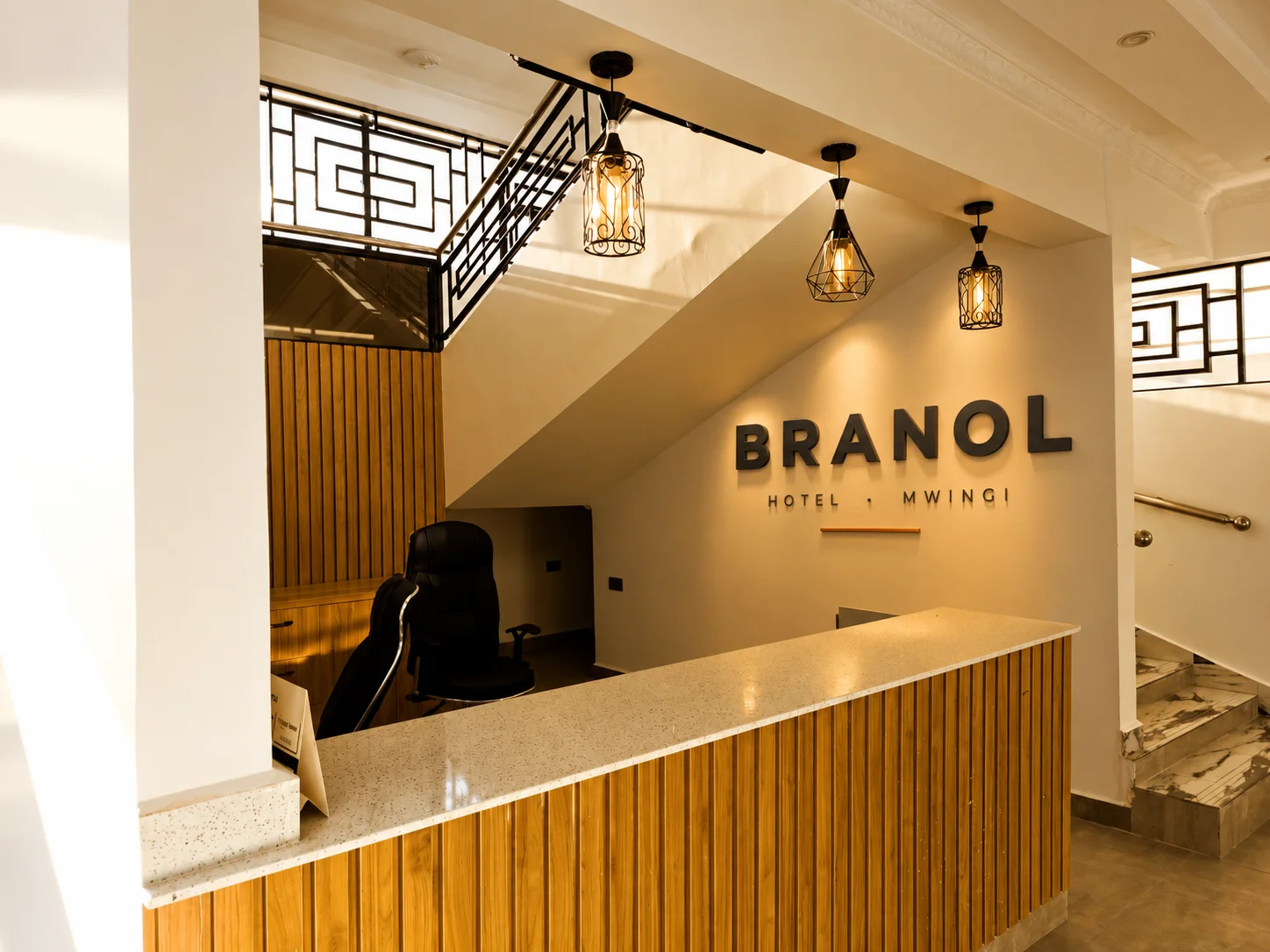
Building Branol from the inside out.
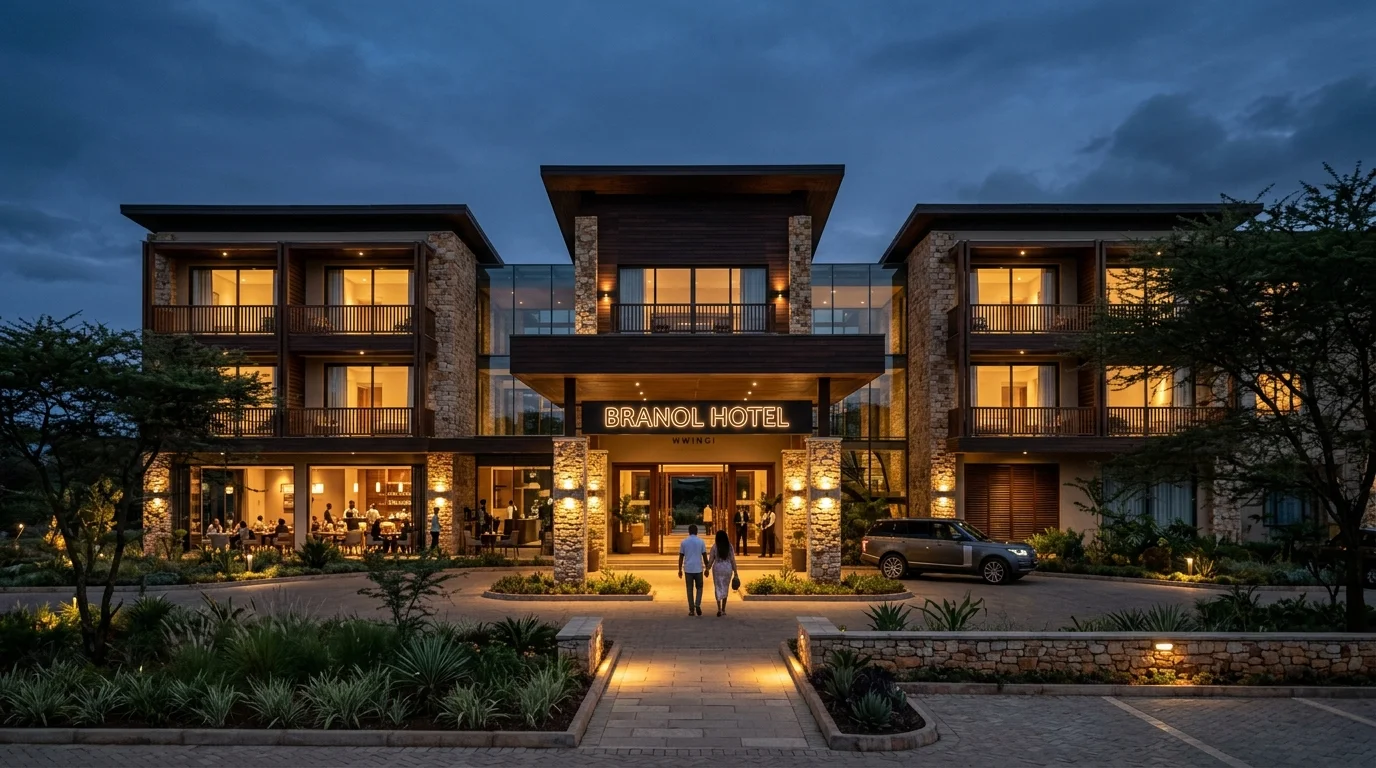
Branol Hotel is a newly opened independent hotel in Mwingi, Kenya. The property arrived with something valuable already in place: a distinctive contemporary building, accommodation, dining facilities and space for meetings and conferences.
What it did not yet have was the system around the building.
No established hospitality brand. No mature digital presence. No website. No defined online booking journey. No coherent visual language connecting the rooms, restaurant, conference business and operational experience.
The project therefore became larger than creating a logo or putting a hotel online.
The objective was to build Branol as one connected hospitality business.
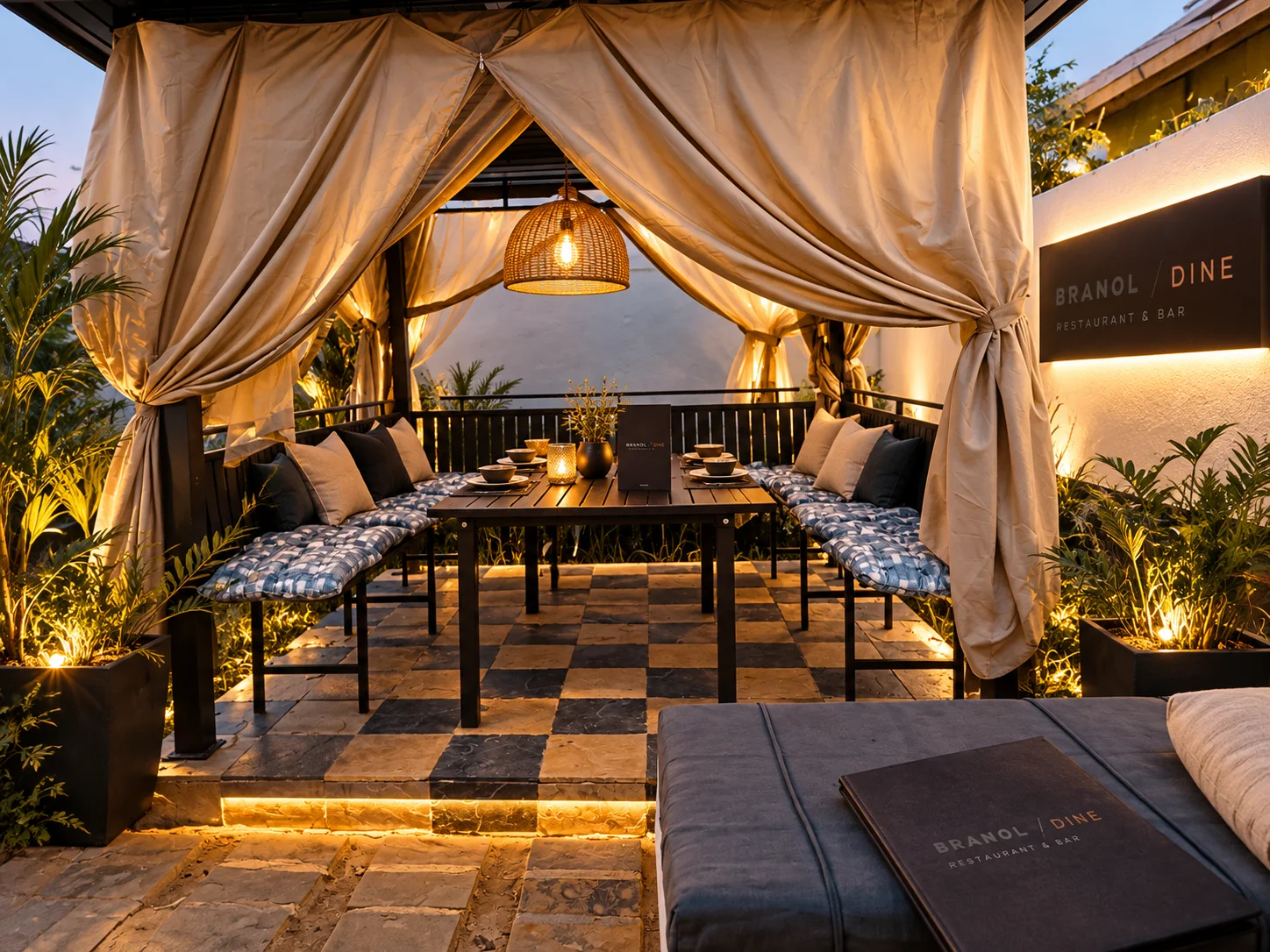
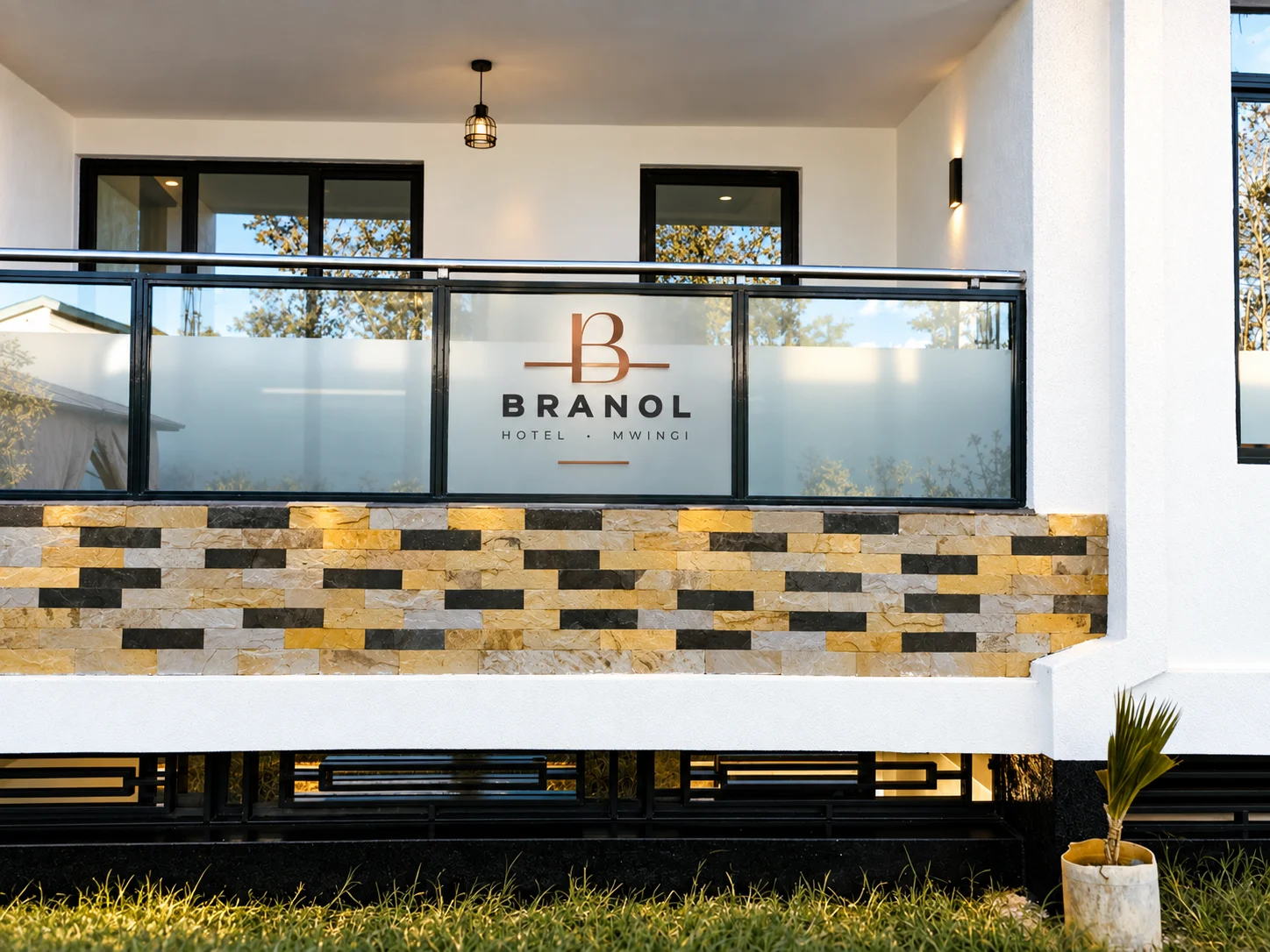
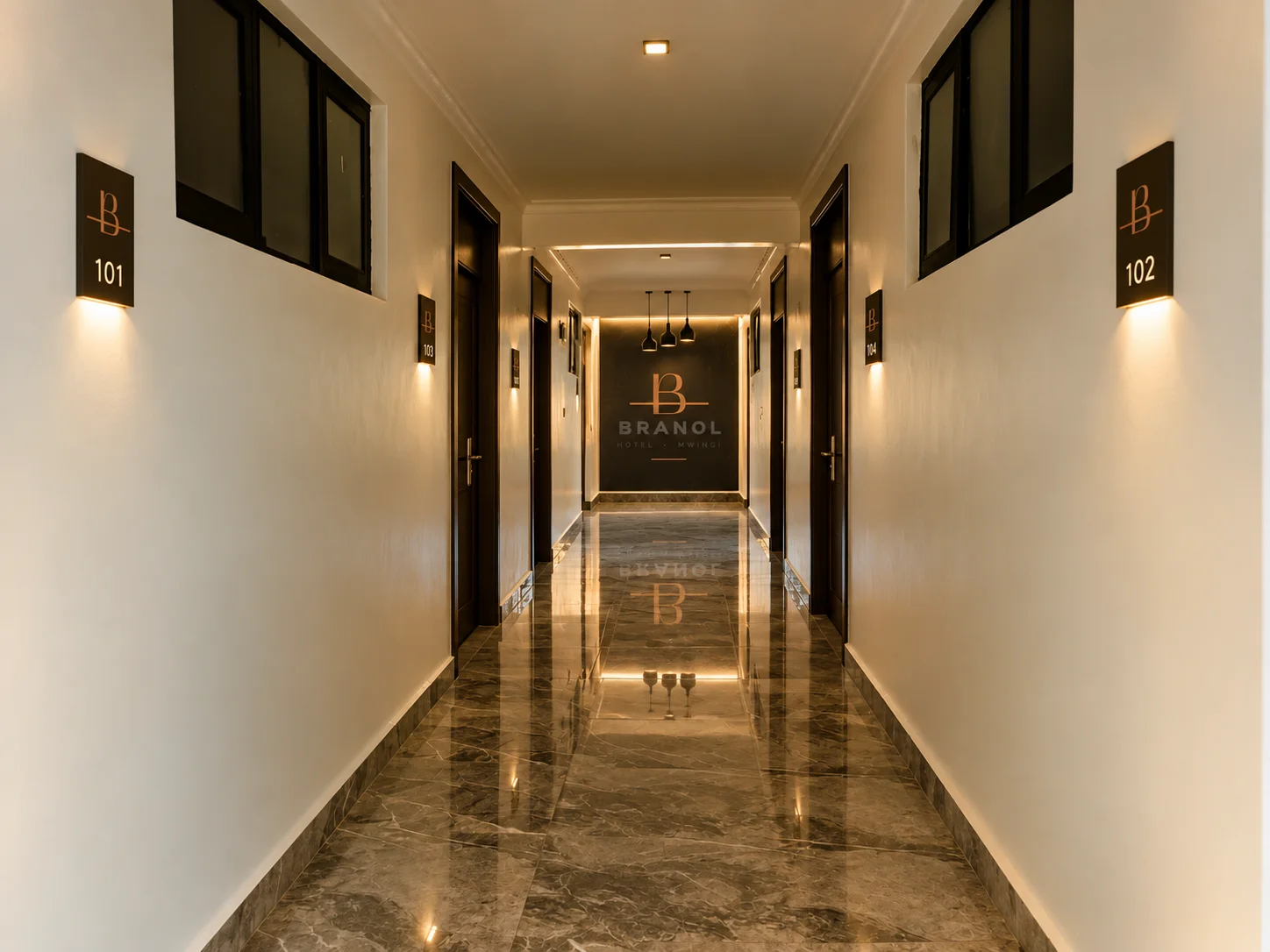
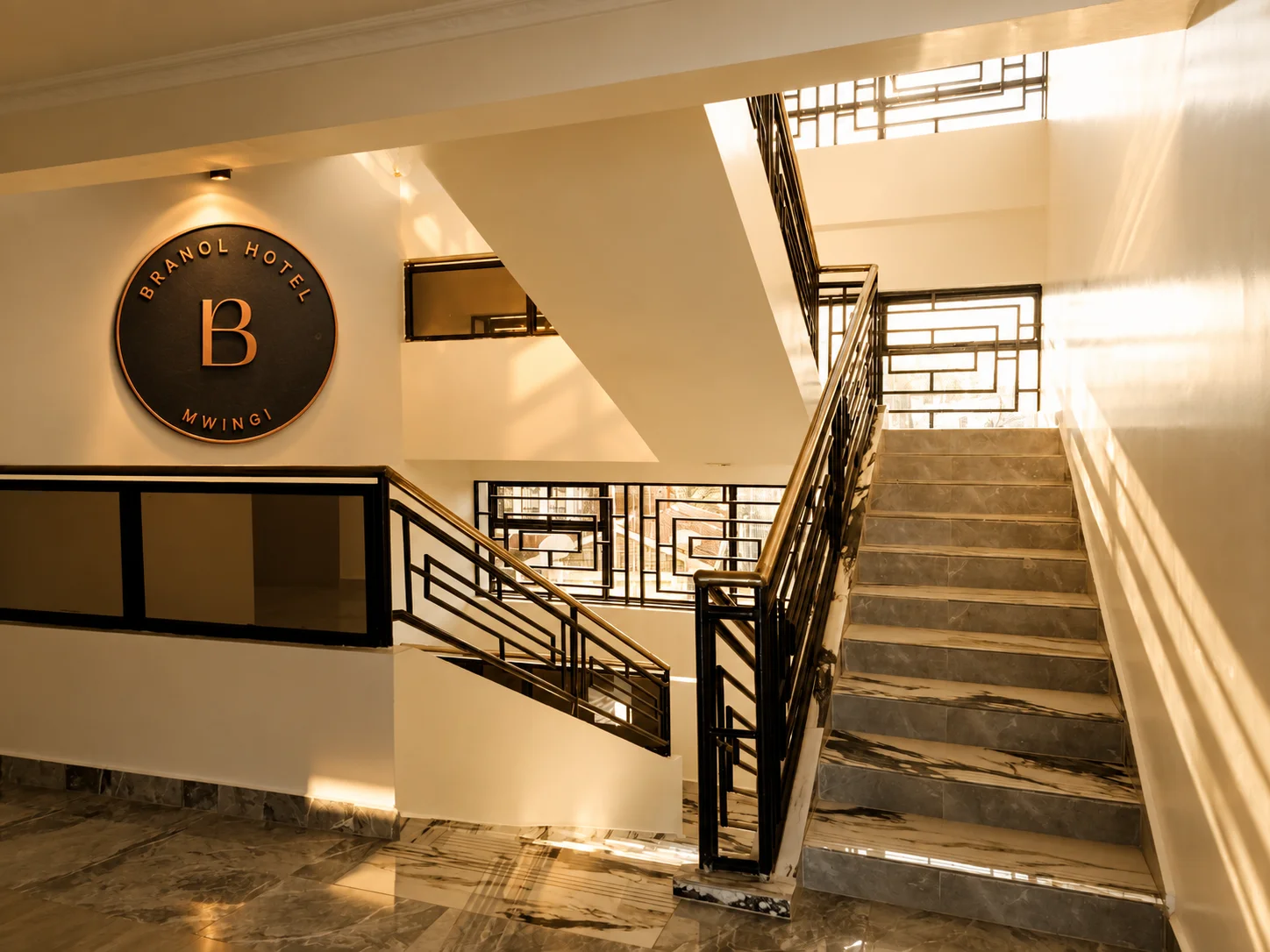
[Image reference 56: branolphotos.png — original upload required]
The opportunity
Because Branol was still at the beginning of its life, there was very little legacy infrastructure to work around. That created an unusual opportunity to design the brand, customer journey and operating systems together rather than repairing disconnected decisions later.
The project was structured around two complementary sides of the business:
- Outside: how guests discover, understand, trust and contact Branol.
- Inside: how Branol manages rooms, restaurant sales, payments, inventory, staff and reporting.
The ambition became simple:
Build a hotel that feels considered before the guest arrives, while they are there, and after they leave.
Finding the brand in the building
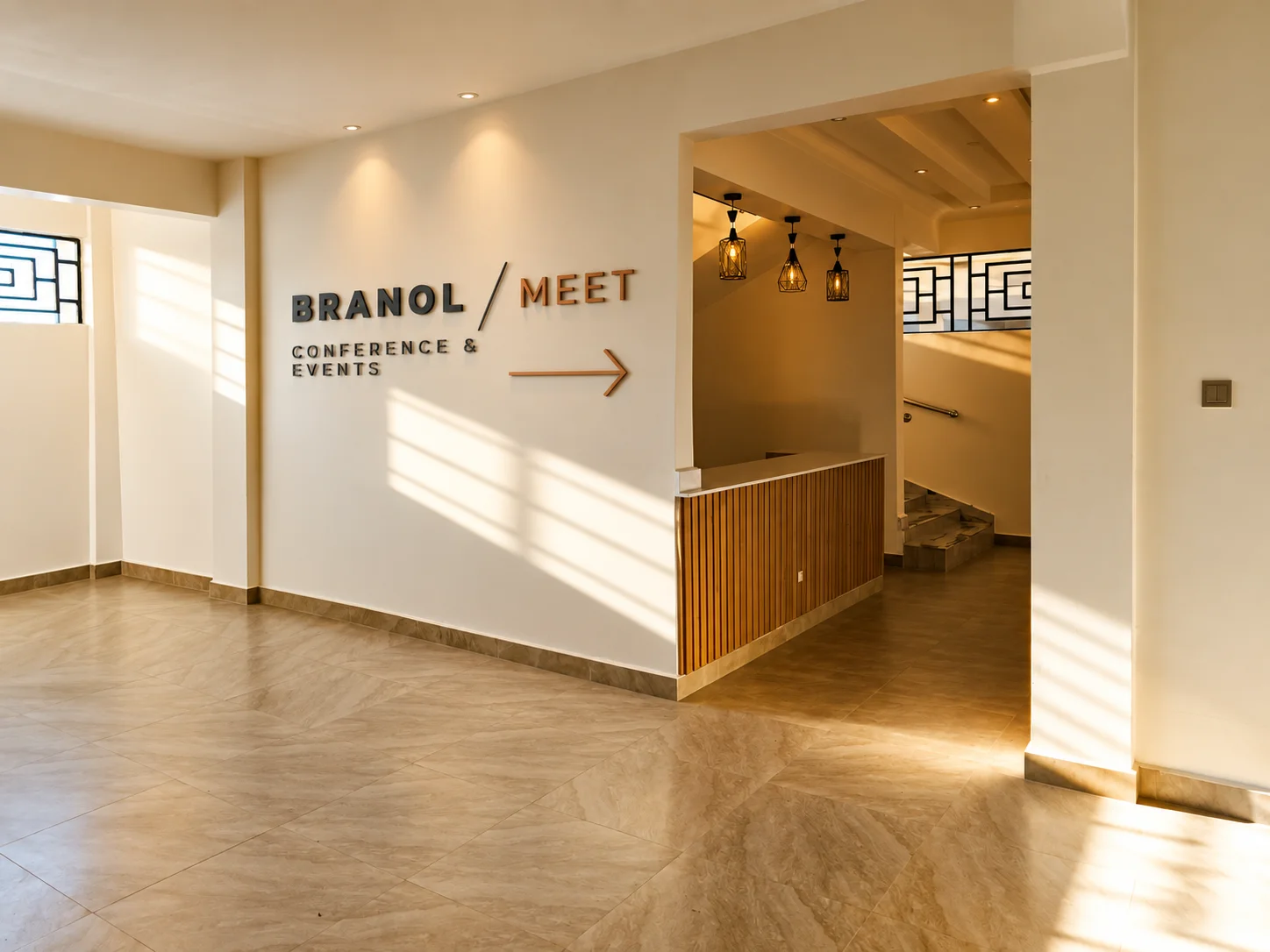
Rather than importing familiar hotel imagery, the identity was developed from Branol's own architecture.
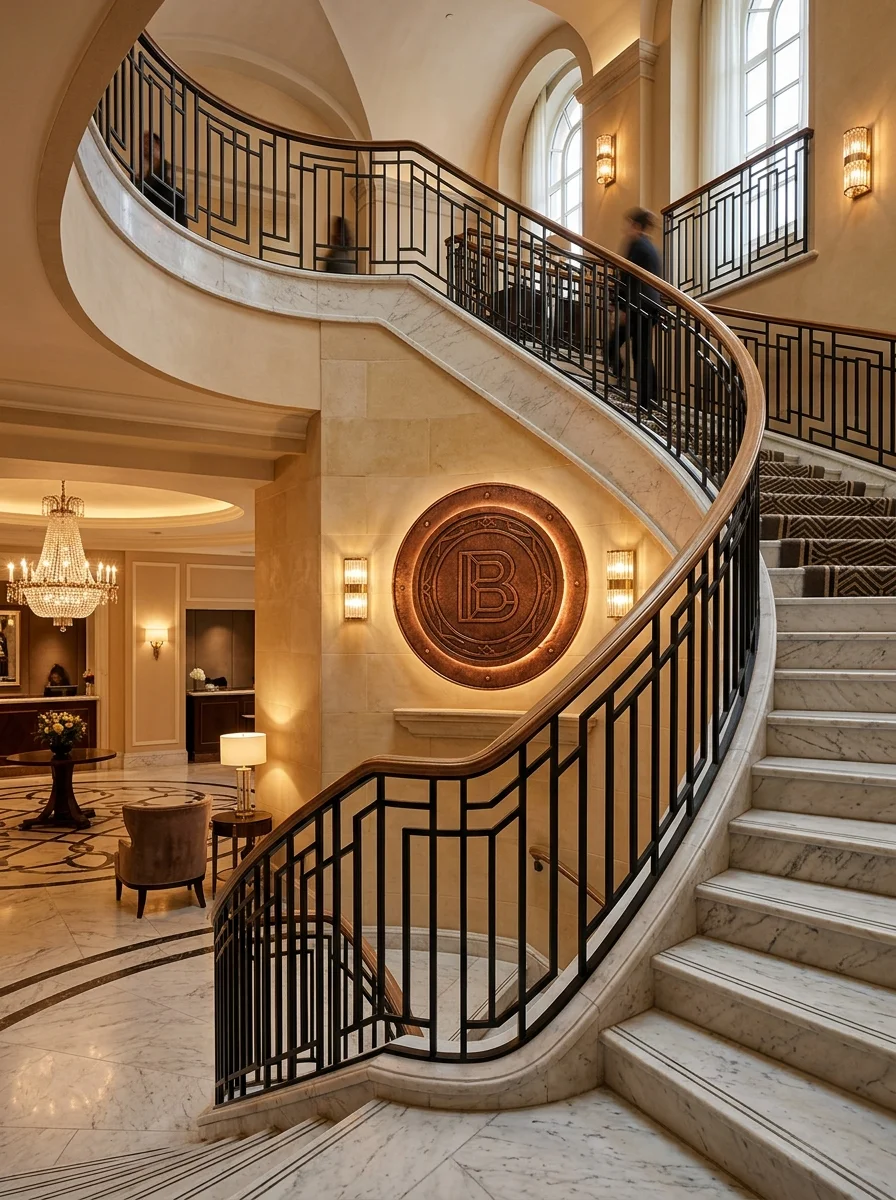
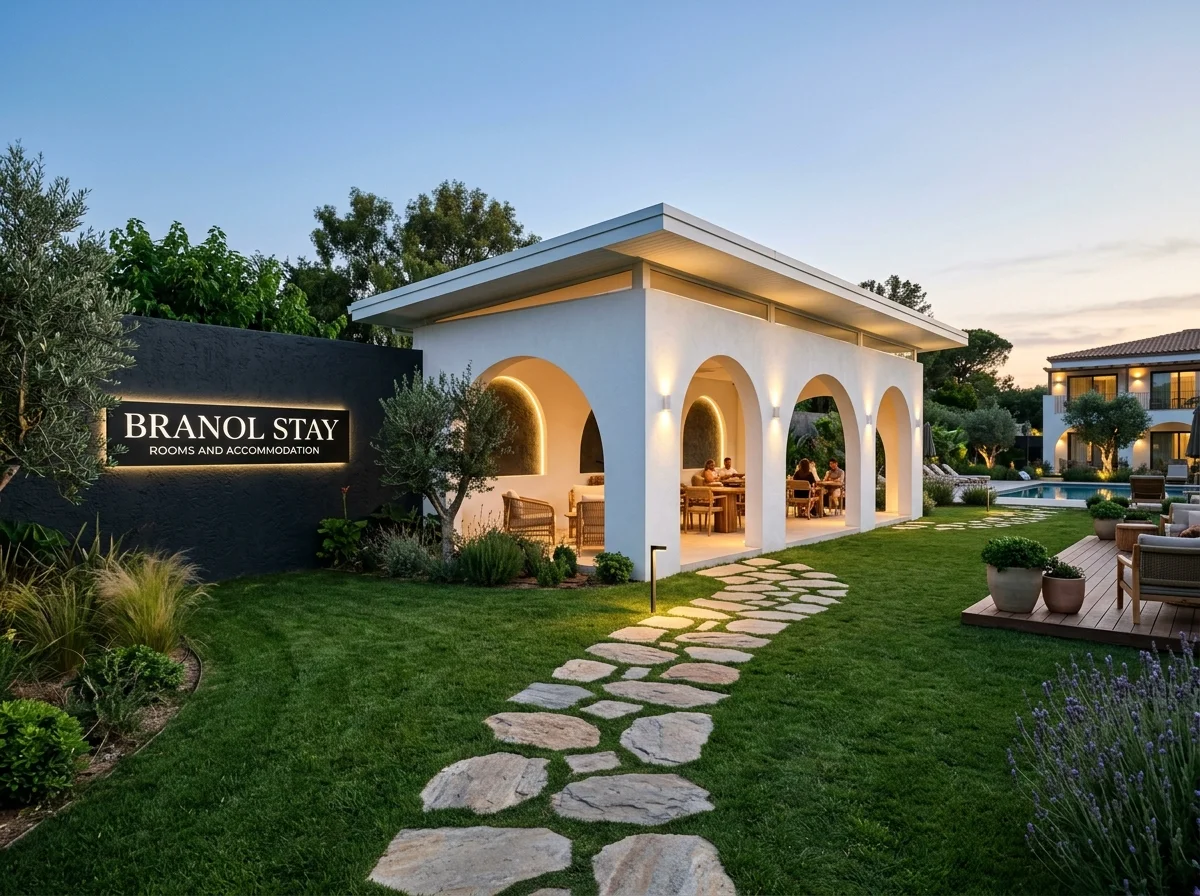
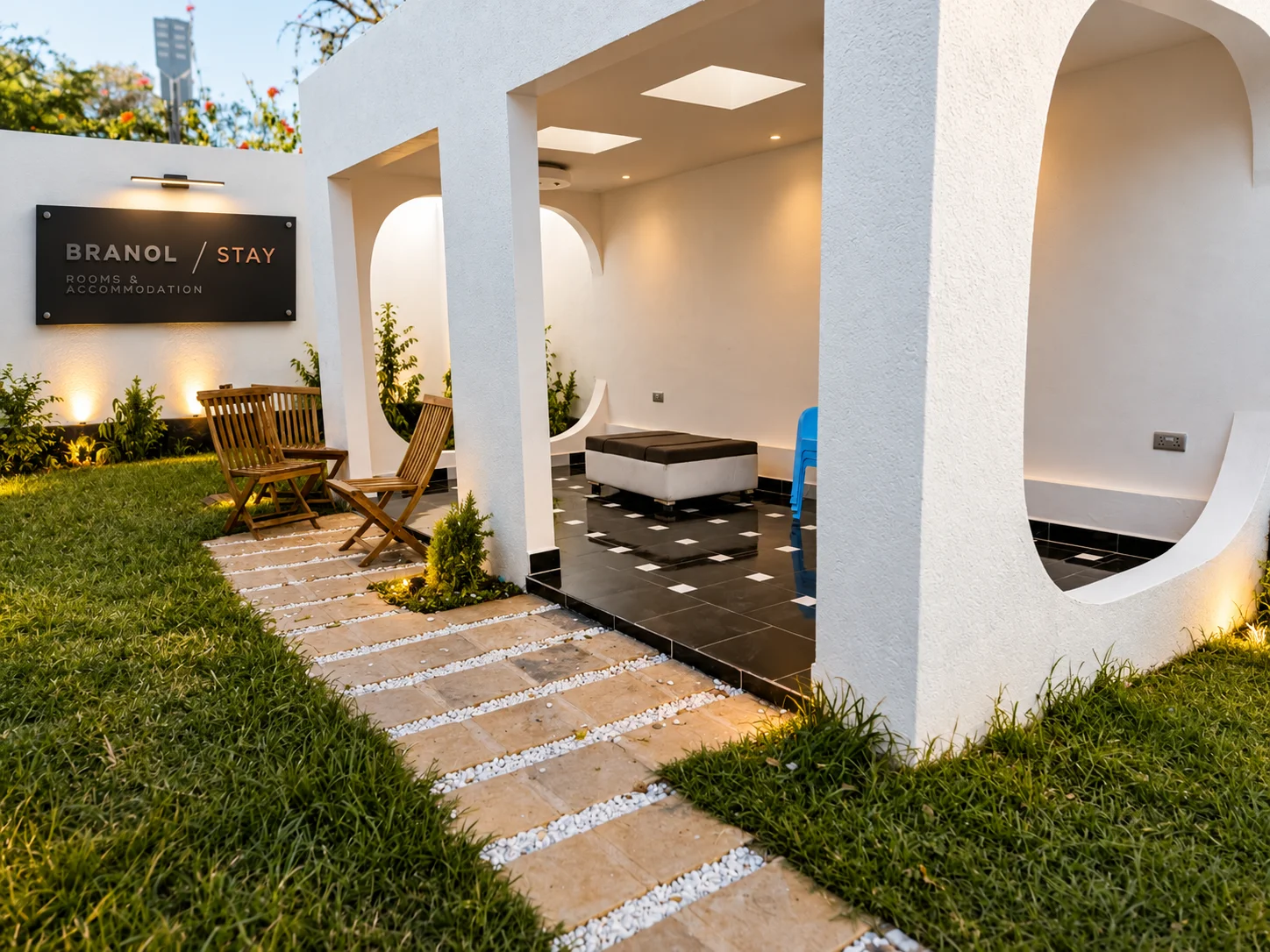
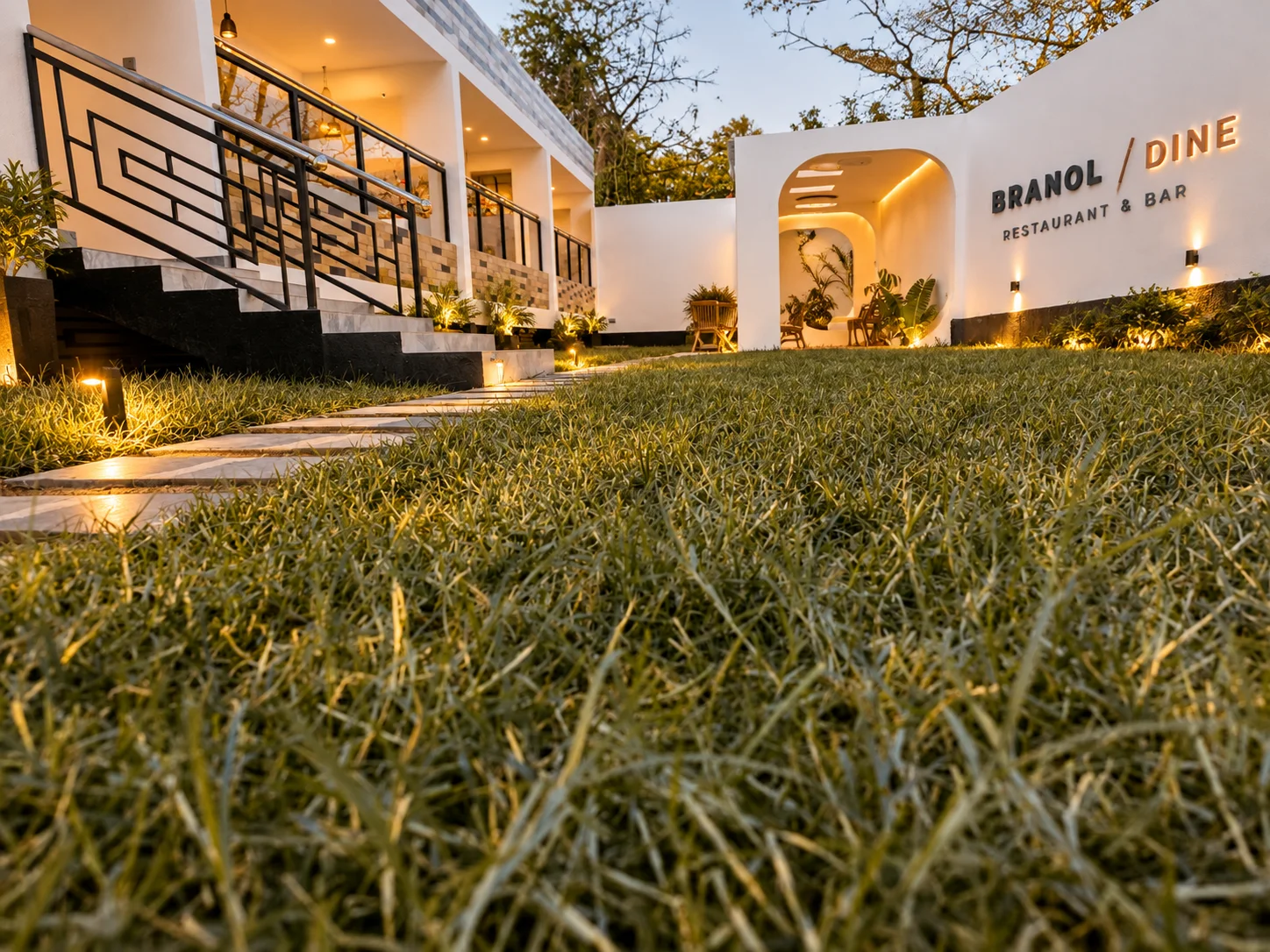
The property already contained a strong visual language: white geometric walls, black metal linework, warm stone, timber, open courtyards, repeated structural patterns and generous negative space.
Those elements became the foundation for a restrained contemporary identity built around the idea of Modern Quiet.
The brand is confident without being loud, premium without relying on ornament, and modern without disconnecting itself from Mwingi.
Stay Composed.
The central brand line became:
Stay Composed.
The phrase works on two levels. It describes the calm we want a guest to experience, but also the deliberate, ordered and considered character of the hotel itself.
That thinking extends into typography, photography, signage, digital interfaces and physical guest touchpoints.
For the launch, a second idea helps position the hotel within its market:
The Modern Side of Mwingi.
Rather than treating location as something to overcome, Branol uses it as part of the proposition: contemporary hospitality set against the openness and pace of Mwingi.
One brand. Three commercial experiences.
The hotel does more than sell rooms, so the identity needed to make its wider business immediately understandable.
The system was organised around three simple pillars:
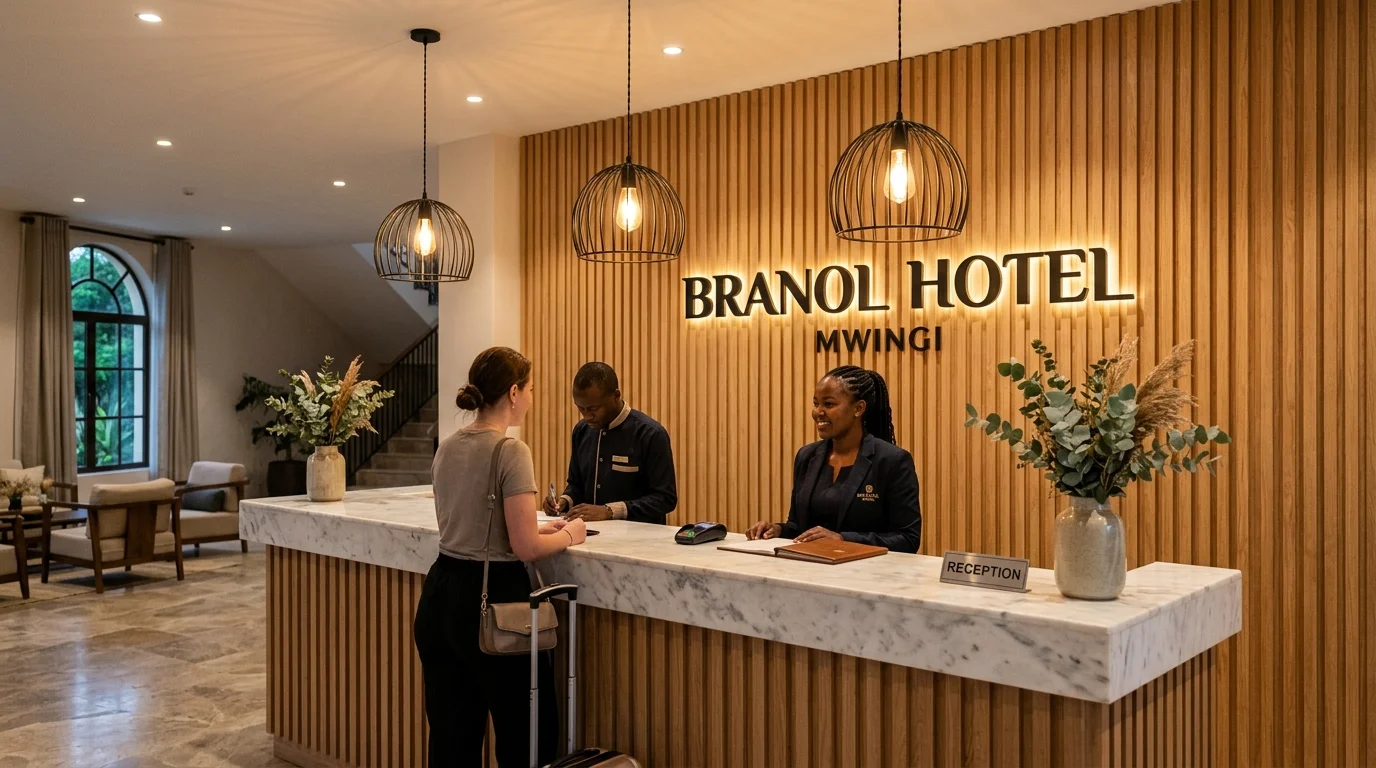
BRANOL / STAY
Rooms, accommodation and the guest stay experience.
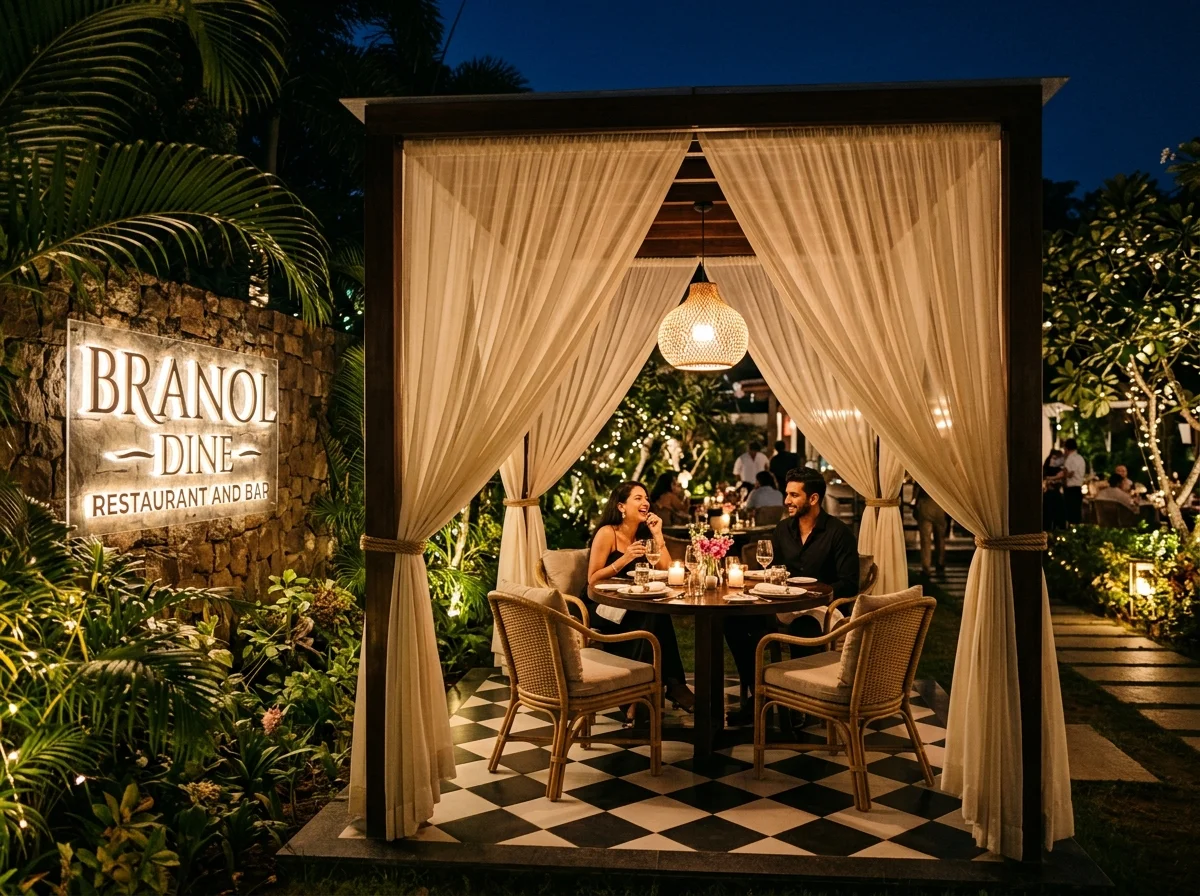
BRANOL / DINE
Restaurant, food, beverages and hospitality.
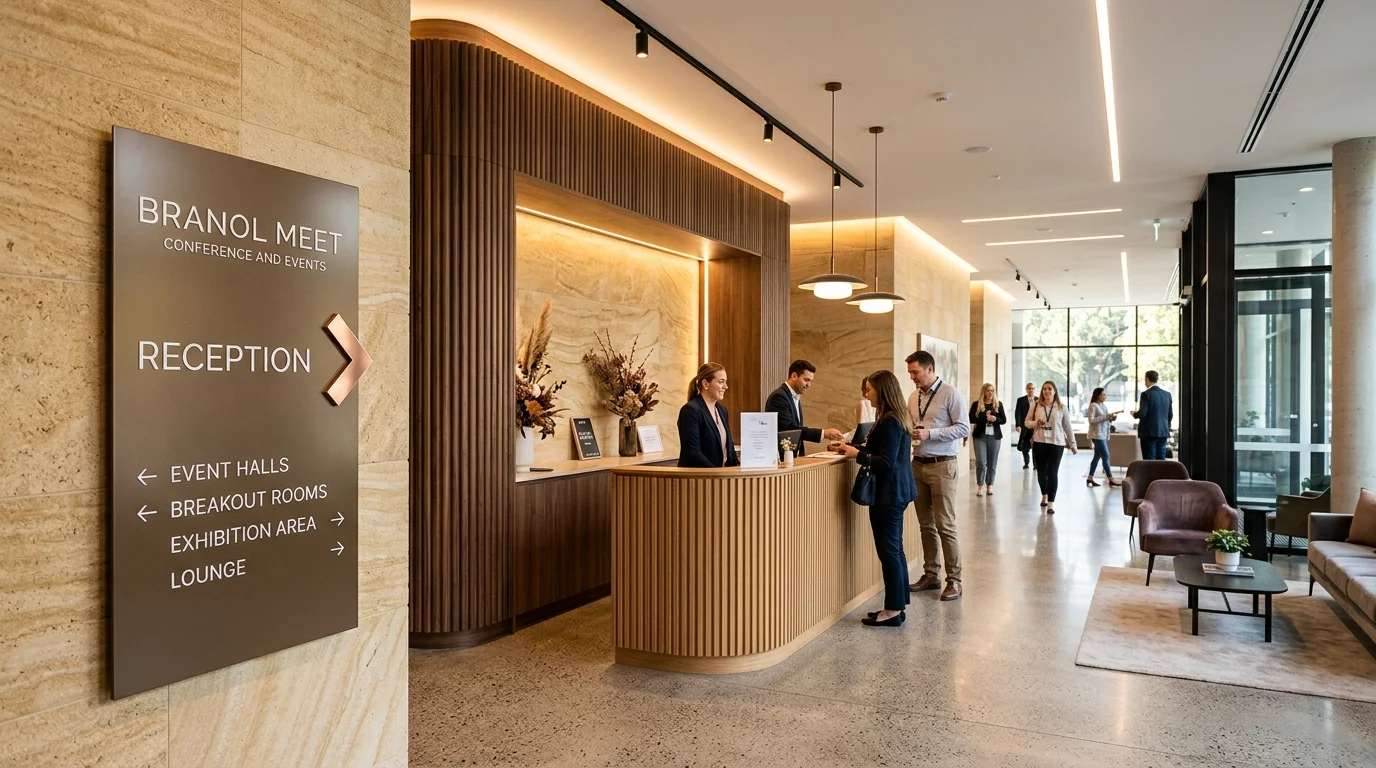
BRANOL / MEET
Conferences, meetings, training sessions, groups and events.
This gives Branol a flexible master brand without creating separate identities for every part of the business.
A visual system extracted from architecture
The visual identity uses restrained typography, warm neutral surfaces, dark structural lines and an earth-toned accent inspired by the property and its environment.
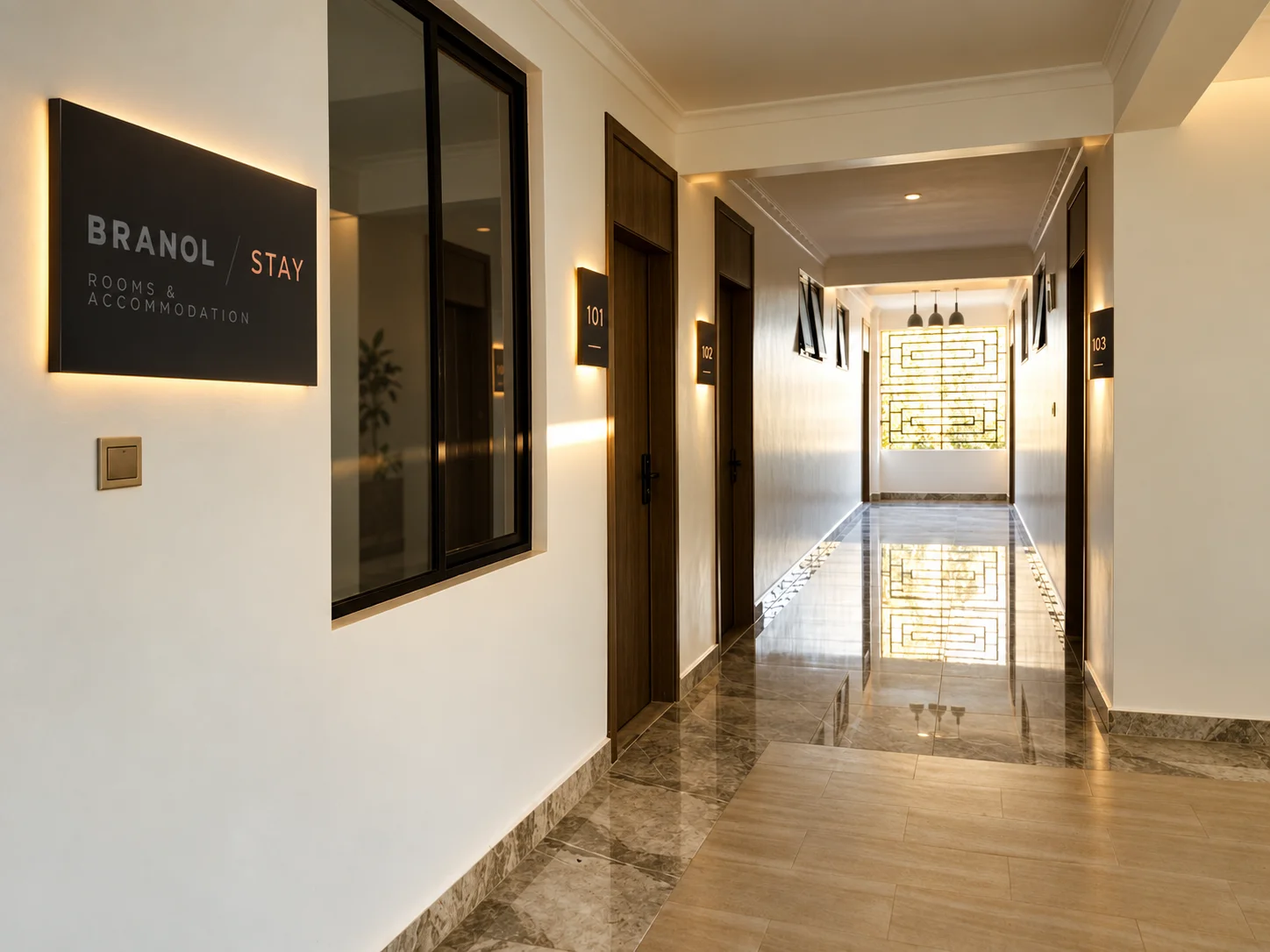
A geometric monogram, horizon device and line system extend that thinking across signage, menus, room numbers, key tags, staff applications, conference material, social media and digital interfaces.
The objective is not decoration.
Every application should make Branol feel more intentional.
Designing the digital front door
For a new hotel, the website is not simply an information brochure. It is part of the sales infrastructure.
The digital experience is being designed around the actions that matter most:
- Book or enquire about a room
- Contact Branol through WhatsApp
- Call reception
- Find the hotel
- Explore accommodation
- Discover dining
- Request a conference or event quotation
The wider launch system also includes Google Business, Maps, search visibility, social platforms, professional photography, WhatsApp Business and review generation.
The aim is to create a journey from search to stay, rather than simply putting Branol online.
The operating layer
The public-facing experience is paired with ServeOS, the operational system being configured for the hotel.
ServeOS is intended to support the day-to-day business across areas including restaurant sales, accommodation, payments, receipts, inventory, customer records, staff access and management reporting.
This creates an important connection between brand and operations.
A guest may discover Branol through Google, explore the property online, enquire through WhatsApp, arrive at reception, order food, make a payment and receive a receipt.
Those moments should not feel like unrelated systems.
They should feel like Branol.
Gallery (carousel):
[Image reference 63: branol9.png — original upload required]
[Image reference 62: branol7.png — original upload required]
[Image reference 61: branol6.png — original upload required]
[Image reference 59: branol3.png — original upload required]
[Image reference 58: branol2.png — original upload required]
[Image reference 57: branol1.png — original upload required]
[Image reference 56: branolphotos.png — original upload required]
Photography as part of the product
For hospitality, photography is not simply promotional content. It is how a guest evaluates a product before experiencing it.
The photography direction therefore focuses on architecture, rooms, food, conference setups, material details, natural light and quiet human moments rather than generic hotel imagery.
The courtyard, geometric openings, corridors, black structural patterns and surrounding Mwingi environment become recurring visual signatures.
Building a system that can grow
Branol is being developed as more than a launch identity.
The system is designed to accommodate future corporate accounts, conference packages, group bookings, catering, events, direct reservations and potentially additional Branol hospitality products without rebuilding the brand from scratch.
That means the work has to function at several scales: from a room key to roadside signage, from a thermal receipt to a website, and from a restaurant menu to a corporate conference proposal.
The project in one sentence
Branol is the design of a hospitality business as one connected system: brand, place, technology, operations and guest experience.
The work is ongoing, but the foundation is now clear.
BRANOL HOTEL
Stay Composed.
Mwingi, Kenya.
About this work
The Branol work extends a visual identity into the places where a guest or member of staff encounters the business. Signage, wayfinding, room numbering, policy communication, registration, guest information and bills are treated as parts of a coordinated experience rather than isolated print jobs.
The documented work includes identity direction, signage and key-holder proofs, guest forms/information packs, thermal bill formats, fabrication and assembly thinking, supplier quality questions, website/hotel-system proposals and solar-signage analysis. Material choices and the realities of mounting a sign matter as much as how the graphic looks on a screen.
The case study distinguishes finished design/analysis files from proposed fabrication, installation, software rollout and power commissioning. It does not convert an invoice or a supplier proposal into proof that every physical item was installed. Selected approved graphics can show how a brand becomes usable across digital, paper and built touchpoints without publishing guest data or private procurement figures.
Brand application studies